

Ghanashyam – Reflected in the Swamis Eye`s
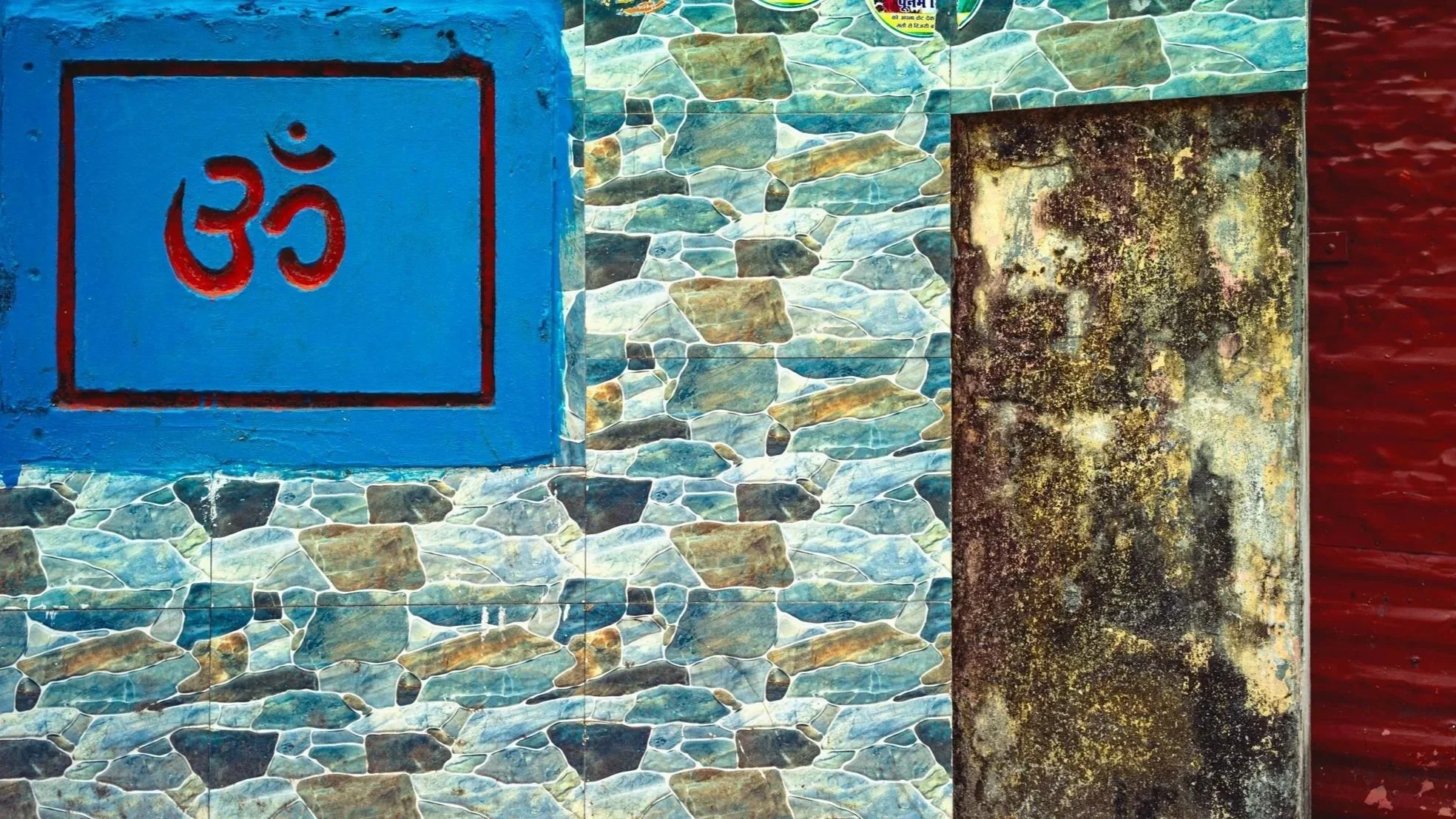
A small visual project had been taking shape for a few days — though I hadn't planned to work on a series when I left for India. The structures of Rishikesh. Not the temples or the ghats at golden hour, but the quieter things. Weathered walls, the peeling layers of aged paint, echoed the old — like tangled emotions lodged deep within a nervous system. Details once overlooked now gathering weight and meaning, revealing the character shaped by time and experience, in both ourselves and the places we inhabit. So, one morning, the camera was picked up and the walk through the little streets of Rishikesh began.
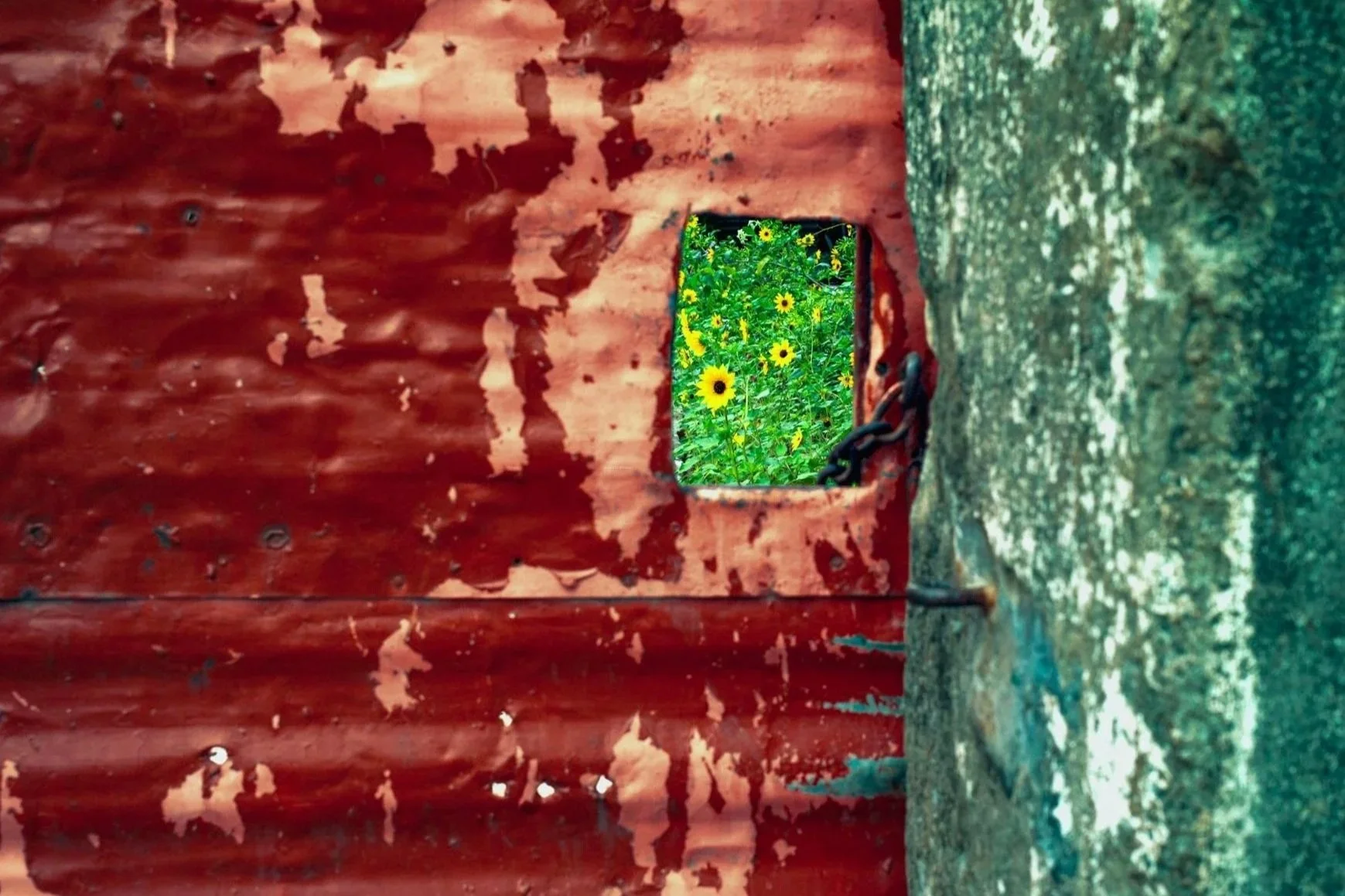
After a while walking along Laxman Jhula Road, an old red metal gate appeared, worn by weather and time, with a square opening where a chain passed through to lock it. Through the gap, yellow sunflowers glowed on the other side — almost like a portal. When I started to frame the still with my camera, a man came from the property behind the gate and asked curiously what it was that I was trying to capture. I told him about the project and what had drawn my eye to the gate and the sunflowers; he listened with genuine delight — not polite interest, but something more alive than that. And then recognition arrived.
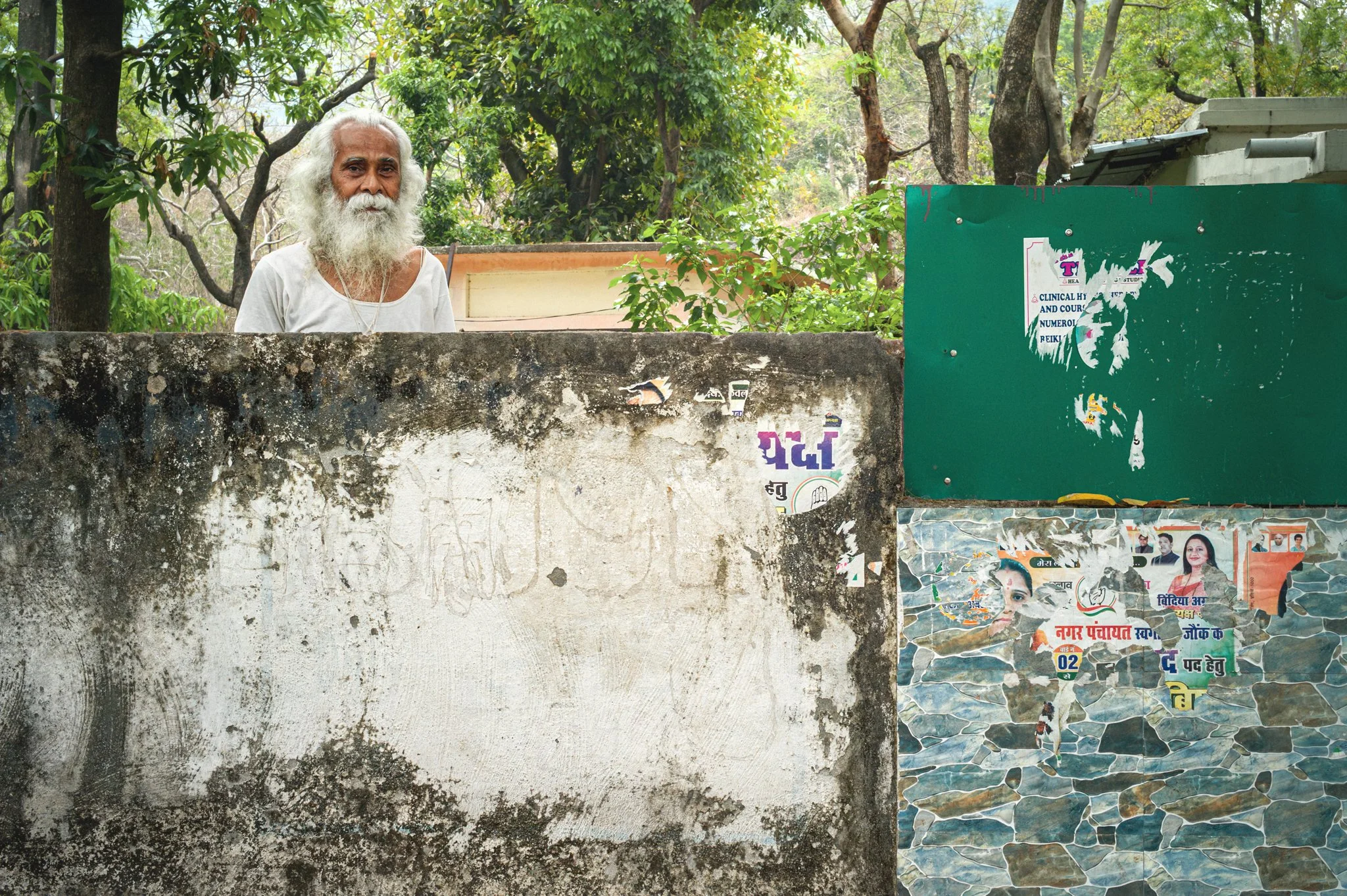
He was the Sadhu I had seen many times before on this road — visible from the chest up above the old white wall bordering the property, watching the life moving along the street below. He always wore white. Always the same white, like a blossom indifferent to the changing seasons. His hair and beard were white too. He was thin and small in stature. Around his neck hung an old white cord with a single wooden pendant — and because everything else about him was so stripped of ornament, that one small object looked like the most valuable thing in the world. The wall had once matched, but time had been quietly working on it for years, peeling the paint back until the grey foundation showed through. Clinging to that crumbling surface were old election posters — remnants of a recent campaign, the noise of a society in motion. And above it all, him. Not unaware of the world passing beneath, but long since clear about the things that drive it.
The thought had crossed my mind more than once on previous walks: this would be a beautiful still — the man, the wall, this composition. So the question was asked. He agreed, and the image was made — him standing where he always stood, above the crumbling white wall, dressed in the same simple white he always wore, looking out at everything and nothing in particular.
More stills were asked for — of him, of his surroundings. He agreed without hesitation and welcomed me onto his property.He was a Swami — a master — and his name was Shyam Sunder. Beautiful dusk colours, he would explain later — the colours the sky holds in its last minutes of light.
A man who had walked his sadhana his entire life, who had arrived somewhere most people spend a lifetime searching for without knowing what they are looking for. From the first exchange it was clear that something beyond ordinary conversation was present.
His home was a plot of land belonging to the ashram, given to him to live in and care for, with a small kutir at one end — simple, modest, exactly enough. The garden was tended with quiet devotion, and that devotion was felt. He pointed out a plant growing beside the sunflowers — Mirabilis jalapa, known in parts of India as sandhyamalati, the evening flower. Its blooms open as the sun begins to set, in colours that shift from plant to plant and sometimes flower to flower on the same stem. The thought formed immediately: a still of this, at the right hour, when the flowers open. But the light wasn't right and the day was too far along. There would be another chance, I told myself.
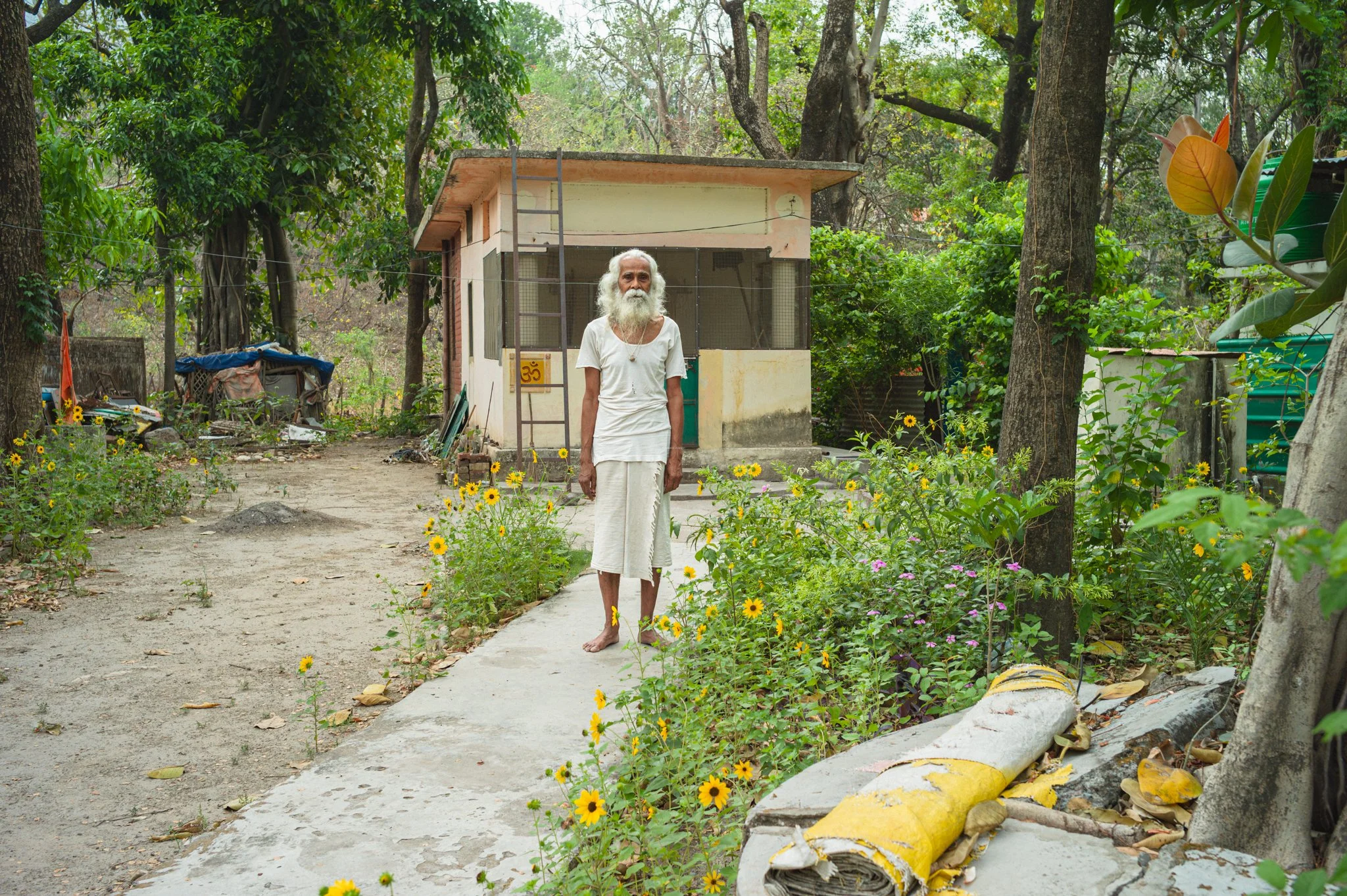
So I continued. The session took place in the open space between the plants and the old white wall. The Leica M9 — the 35mm and the 90mm, everything manual, one frame at a time. Not many stills. Only what was clear, only what came organically, with natural light. Maybe an hour passed.
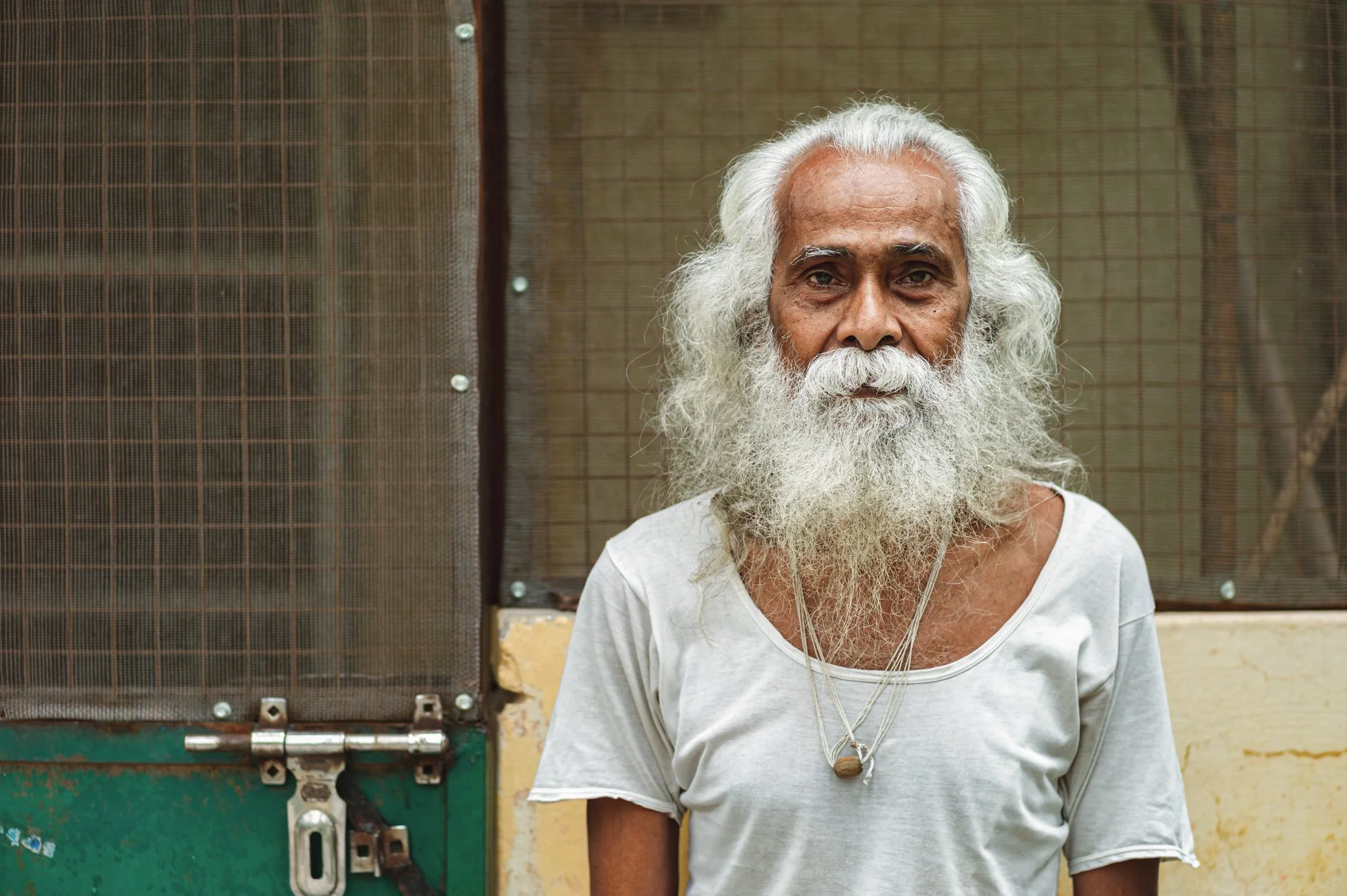
Throughout my time with him, Swami Shyam Sunder Ji carried himself with a stillness that felt like his most natural state. Every look, every word, every movement held the same quality: unhurried, clear, fully present. He was genuinely glad to give his support — not merely his permission. There is a difference, and it was felt.
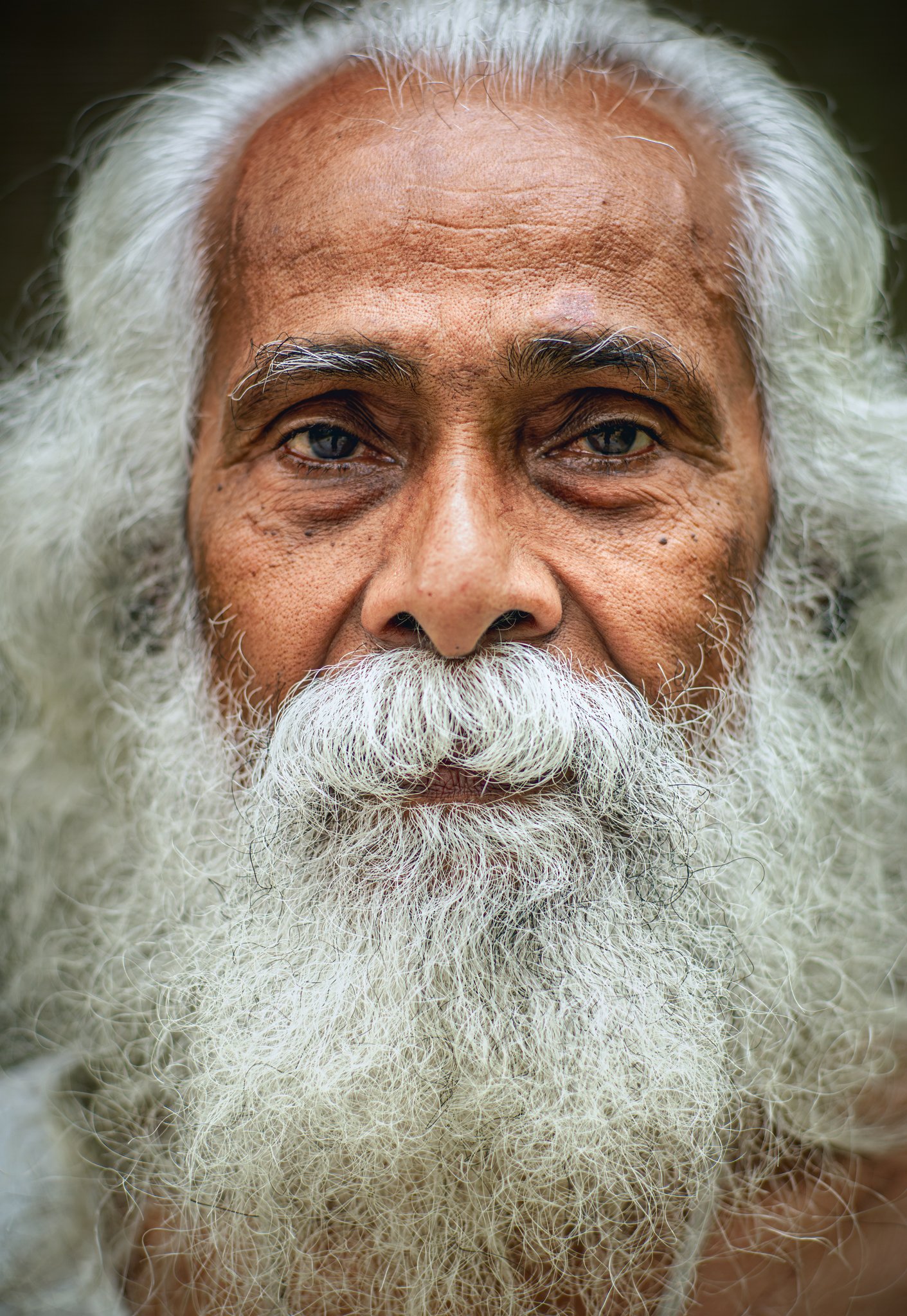
Working with the 90mm, one close-up portrait was made that later stopped everything. When looking at it now, the eyes are difficult to describe. No smile, and yet warmth. No sadness, and yet depth. Something in that gaze cannot be placed — a completeness, as if what looks back is not only the man but something larger, looking through him. Brahman. The still ground beneath everything that moves. It felt less like studying a portrait and more like being seen.
Searching later for a title that could hold what that image contained, it was found: Ghanashyam — one of the names of Krishna, meaning the infinite dark sky, the depth that holds everything without being disturbed by any of it. It is what a human being looks like, I believe, when they have fully become what they already are. When the noise falls away. When the need to reach, to perform, to arrive somewhere dissolves. Something was placed into that portrait. It is there, waiting for whoever is standing still.
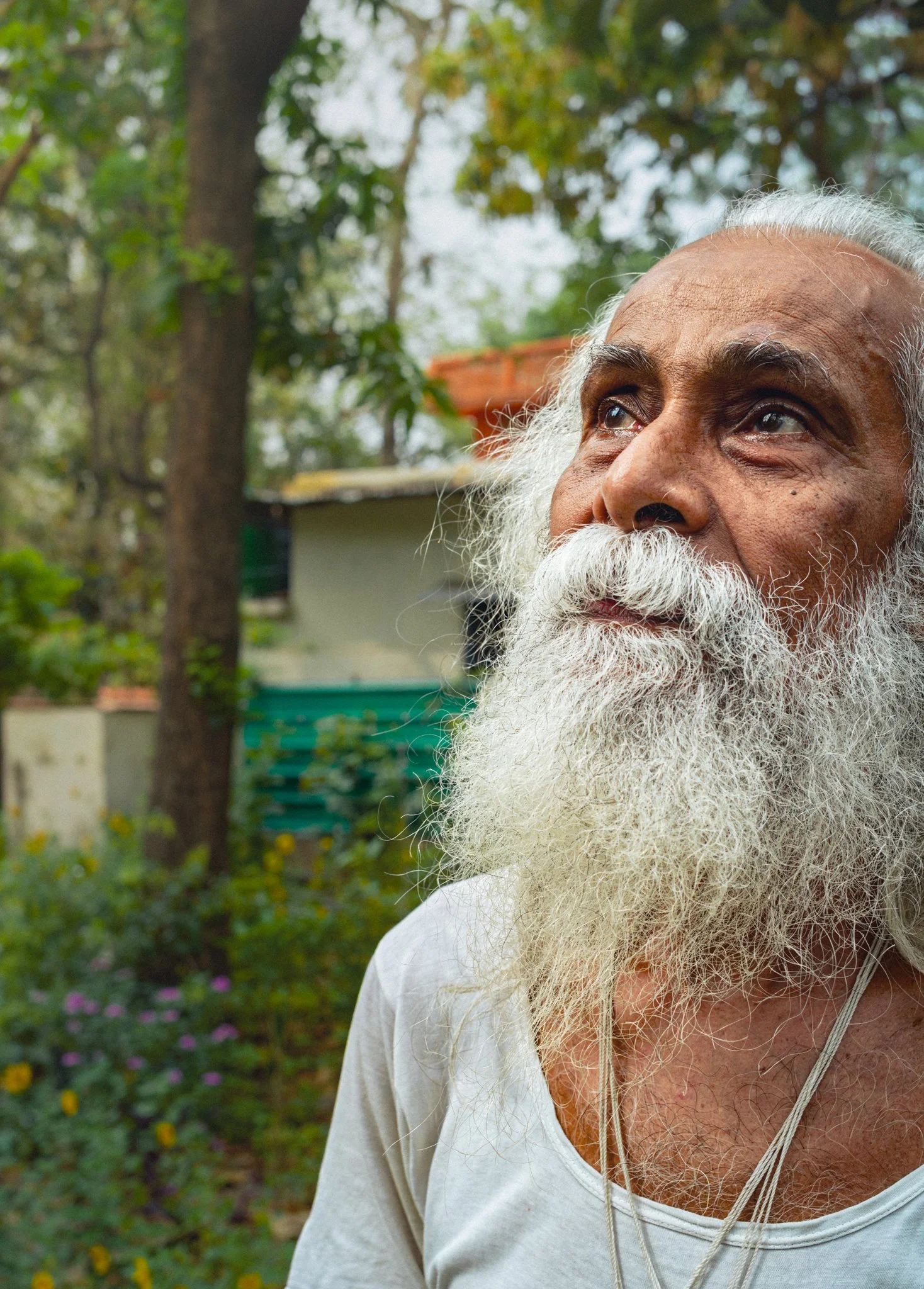
In the time I am very honoured to have spent with him, Swami Shyam Sunder Ji spoke about life as a kind of theater. Each person has a role, he said, and there is a director — who may or may not be satisfied with how that role is played — but who is always present to help reveal where one is strong and where one falls short, and the more we respect the script, the more fully we inhabit our role.
While in Rishikesh, I met a few Sadhus and Swamis, and much of what passed between us was never spoken — transferred in stillness, in presence, in something that moves without being understood rationally but emotionally, through feelings and ideas. With Swami Shyam Sunder Ji it could also happen in words. His English was precise, and because of that, what had until then been received in silence could now also take shape in the conscious mind.
Before leaving, I asked him if he had a message to share with the world — something that could be carried alongside his portrait.
He responded:
"Needs are the root of suffering."
When he opened the red metal gate to let me out, I offered him some money. He laughed — warmly, from somewhere genuine — and refused. Exactly as he had been from the very first moment.
The sandhyamalati still was never taken. There were moments when I could have gone back at the right hour, or even passed the little property with him standing behind the wall, saying hello. But something else always pulled me elsewhere. And then one afternoon when I wanted to go, I walked past and looked up at the wall, and he wasn't there. He was always there — that was the thing about him. Always standing above that old white wall, watching the road with the same unhurried presence. But that day the wall was just a wall.